Today’s National Croissant Day prompted me to do fieldwork at numerous New York bakeries to sample the classics and investigate trendy interpretations.
I first reread chef Dominique Ansel’s criteria for a good croissant. In Everyone Can Bake, Ansel explains that applicants for bakery employment take The Croissant Test. Candidates bake croissants as part of the evaluation process. Ansel assesses skill this way:
First, I examine the size and weight of the croissant. I like to eat croissants that are almost too big to hold with one hand. A croissant isn’t intended to be a small bite or a canapé – it should be a meal in itself and needs to leave you satisfied. Beyond that, a generous size also prevents the crumb from drying out as quickly, since there’s more mass to keep in the moisture.
Next, I examine the shape: ls the croissant rolled tightly so it doesn’t unravel? Does it rise, proudly, in the center with a tall peak rather than what we call a flabby shape? As I pick it up, I look for a weight that is deceptively light for its size, a hint of the air pocket and layers within. By now, I already know whether the croissant has potential.
And then, the dreaded center cut: as I draw a serrated knife delicately through the croissant, young chefs hold their breath. The inside of the croissant should reveal even layers of pastry in a spiral pattern we call the honeycomb.
After slicing it open, I lean in to smell the croissant. It should smell slightly yeasty and sour; fermentation inside the dough gives the croissant a deep and complex flavor. Few people realize you need acid from the fermentation of the yeast to really highlight the sweetness and buttery notes of the dough.
Finally, I take a bite. The crust of the croissant should shatter as I bite down, the confetti of crumbs falling everywhere.
Dominique Ansel, Everyone Can Bake: Simple Recipes to Master and Mix (New York: Simon & Schuster, 2020), 216.
The exercise of visiting French bakeries mattered more to me than the extent to which the croissants met the preceding criteria. It was satisfying to vary my routine, which normally has nothing to do with croissants. Over the course of multiple fieldwork excursions, I sampled croissants at Dominique Ansel Bakery, Dominique Ansel Workshop, Aux Merveilleux de Fred, Épicerie Boulud, Supermoon Bakehouse, and L’Appartement 4F.
In most cases, I visited later in the day, a suboptimal time to critique goods that may have been baked before sunrise. Even though it was about 3 p.m., the croissant from Dominique Ansel Bakery was more than palatable, but didn’t meet all of the chef’s criteria.
For the record, here is Ansel’s ideal.
Among my research specimens, Supermoon Bakehouse ranked highest. It was smaller than Ansel’s, but hit a homerun with regards to the criteria.
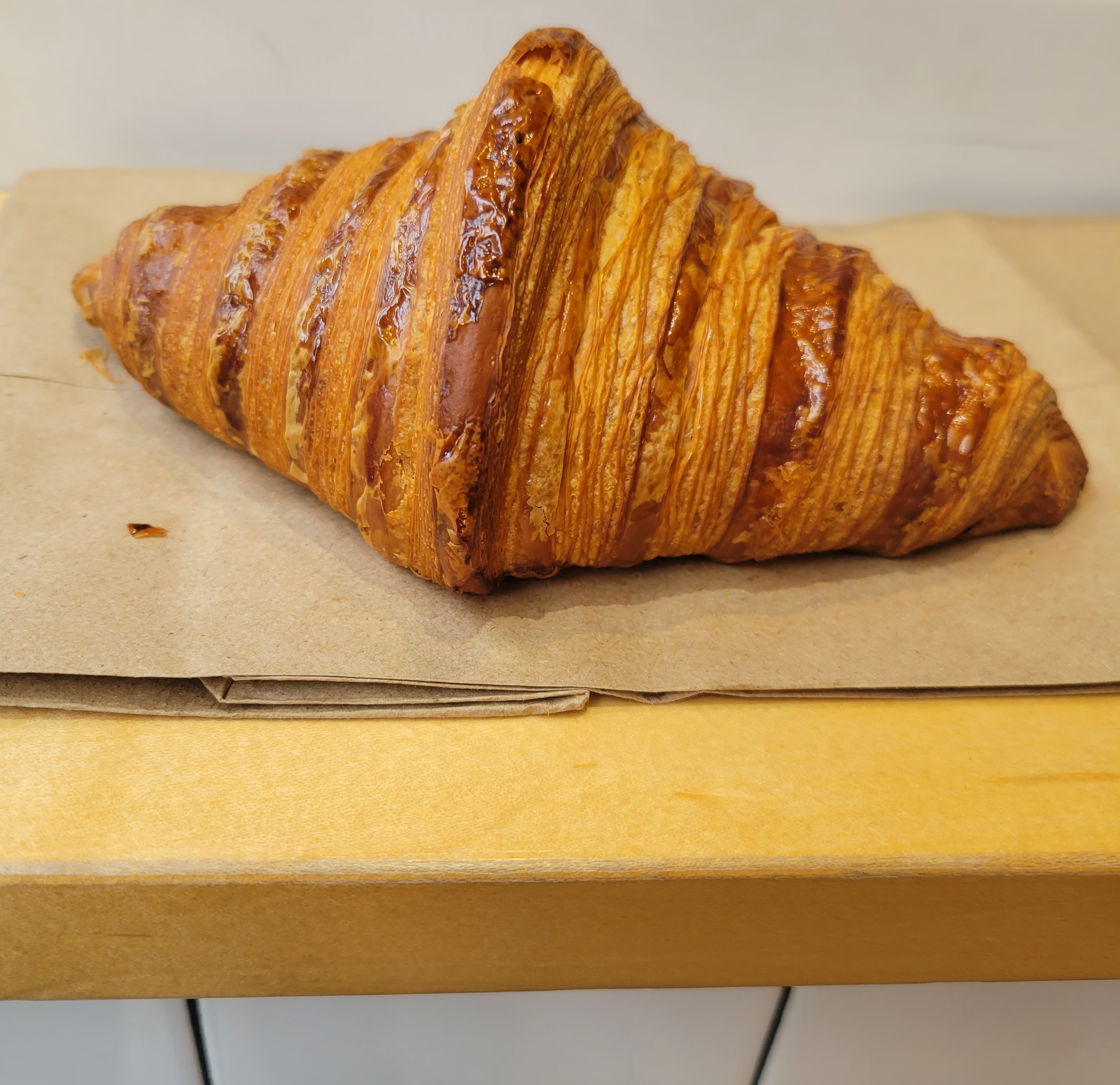
On the trendiness meter, L’Appartement 4F is full tilt. Despite my 9:30 a.m. timing, I was told the butter croissants were sold out and I purchased an everything croissant instead. It was fine and flavorful, but didn’t dazzle. Meanwhile, there are great lines and media coverage of this it-bakery with an engaging backstory.
In the category of croissant-adjacent trends, I first revisited the almighty Cronut. More often than not, I find them imperfect nowadays. They tend to be densely greasy and sloppy in presentation. In Dominique Ansel: The Secret Recipes, the chef/author notes a Cronut will come out greasy if the frying oil temperature is too low. C’est la vie. Research is what it is. I continue to queue up for a Cronut regularly to observe the consumer demand as the phenomenon marks its 10th anniversary this year.
I tried a croissant doughnut from The Donut Pub for the first time recently. I’m not sure how long these have existed, but the new-to-me discovery was quite enjoyable. Reading “After 50 Years, the Donut Pub Is Expanding” was useful background information and tasting this chai croissant doughnut was delightfully educational.
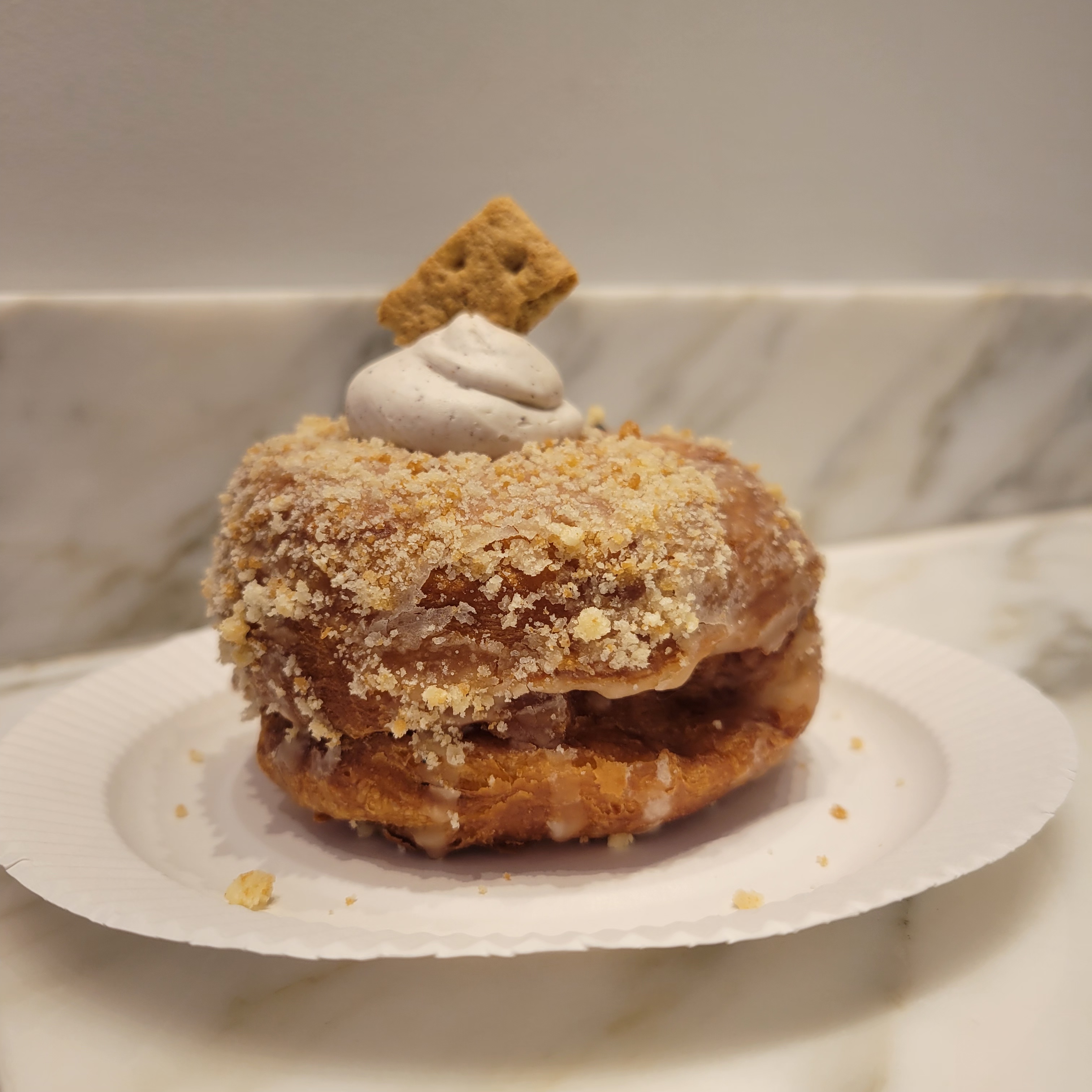
On two occasions, I tried the wildly trendy Suprême from Lafayette Grand Café & Bakery. It’s drawing hours-long lines as the “latest entry in New York’s croissant craze.” Per Grub Street, “This tightly coiled, finely layered confection contains a flavored pastry cream, and its outer rim is generously dripped with a topping to match.”
I second the conclusion here that the pastry is “pretty underwhelming.”
This post shows another view of the line and reflects the common reaction of social media influencers.
The U.S.-based French Morning published its take on the Suprême by asking, “Le New York Roll va-t-il détrôner le Cronut?”
The Suprême’s social media popularity begs reevaluation of the 2018 question, “Is Instagram Ruining the Croissant?” The New York Times addresses the issue in “Vive le Croissant!”
The Cronut, Suprême, and L’Appartement 4F mini croissant cereal are implicated in “The 11 Weirdest Things We’ve Done to Croissants.”
Like the Cronut, the Suprême has sparked worldwide copycats.
Stateside, there’s Marvel Cake in the San Francisco South Bay Area, which introduced the pastry below in the fall of 2022. This video shows the line of customers in pursuit.
A San Diego representative:
Here’s an Indian bakery featured in the story “Much a ‘dough’ about croissants.”
One London version:
Dubai style:
Social media users on TikTok popularized Le Cube Robuchon, a square brioche pastry by Le Deli Robuchon in London. The bakery first posted it in December and it has gone viral. Though it’s popularly described as a square croissant, traditionalists would reject the classification.
These copycats from London and New York are two of many.
March 2023 update: The New York Times assesses the variations and declares “we will never reach peak croissant.” Year’s end brings this Salon observation: “The fancy croissant obsession continues over a decade after cronuts took the internet by storm.”
I’m watching for news of the May festivities for the Cronut’s 10th birthday. Meanwhile, I’m grateful that National Croissant Day channeled my attention to same. Intentionally studying them was enriching. I never appreciated their wonder until now. I’ve seen the light and digested the wisdom.
Mid 2023 update: I covered the Cronut’s 10th birthday.
March 2024 update: The BBC discusses Cronuts and more in this story on croissant history, addressing the newest trendy variation: the crookie. It’s defined as cookies baked into the center of a croissant. It originated in Paris.
2025 update: A pastry chef analyzes the “true costs of croissant mania.”
 Andrea Adleman | Cupcakologist