Oooo, molasses. Delicious. I didn’t know how much I liked it until I made my first batch of gingerbread cookies a while ago.
Any excuse to bake with molasses works for me. For purposes of National Gingerbread Day, it’s a fait accompli.
Two of the three cakes I baked are directly tied to my historical research. The first known cupcake reference appears in Amelia Simmons’ 1796 cookbook, which includes her recipe for a “light Cake to bake in small cups.” In American Cake, author Anne Byrn published an adaptation of Simmons’ gingerbread recipes.
Amelia Simmons wrote the first American cookbook in 1796. … Simmons included 7 versions of gingerbread in her book. Her cakey Gingerbread No. 2 contained white sugar, butter, and eggs, a departure from the stiff, traditional gingerbread dough rolled and cut into cookies. If you bake any of these old recipes verbatim today, you will not have much success. So the following recipe is an adaptation of several of her recipes to create a uniquely American gingerbread recipe that works today.
— Anne Byrn, American Cake
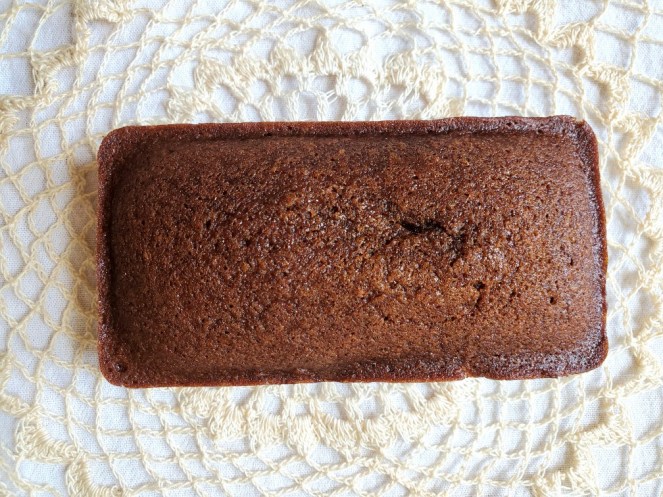
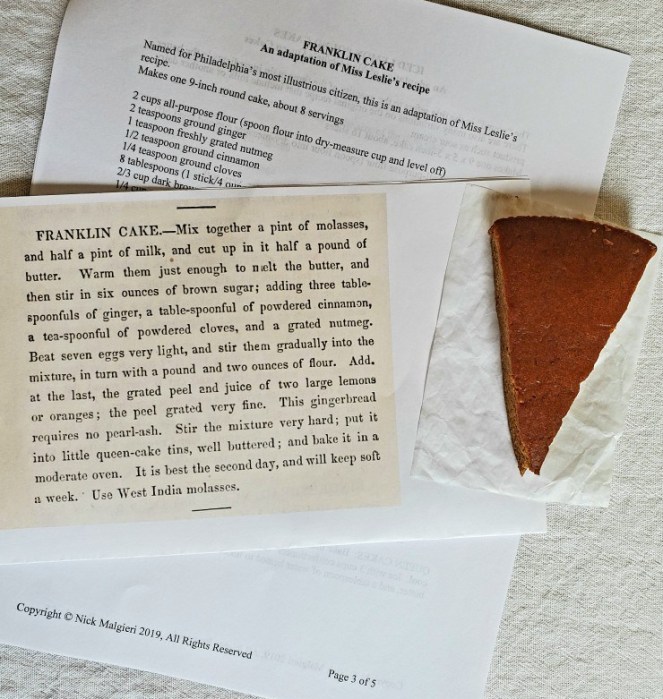
Chronologically, the next cookbook that factors into cupcake history is by Eliza Leslie. In 1828, she published a “cup cake” recipe that is the first known use of the term. In May, I attended a demonstration by veteran pastry chef Nick Malgieri, who made a number of cakes based on Leslie’s recipes. Gingerbread was among his historical tributes.

Earlier this year, I made a modern gingerbread, following David Lebovitz’s ginger cake recipe.
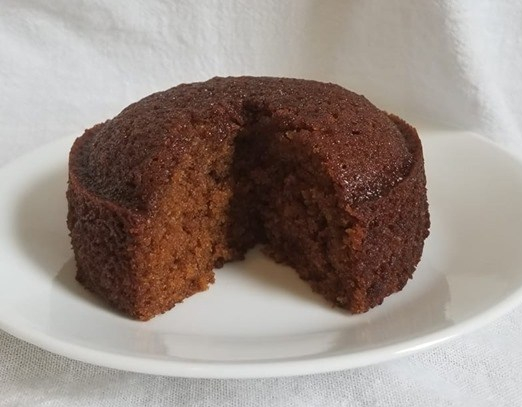
Overloaded with fresh ginger, I thought this one tasted the best. The others were unquestionably enjoyable and an instructive taste of history, but modernity takes the cake if I’m speaking as a food critic.
All told, this was a most enlightening exercise. I’m so glad someone manufactured a National Gingerbread Day so as to structure my homework accordingly.
 Andrea Adleman | Cupcakologist